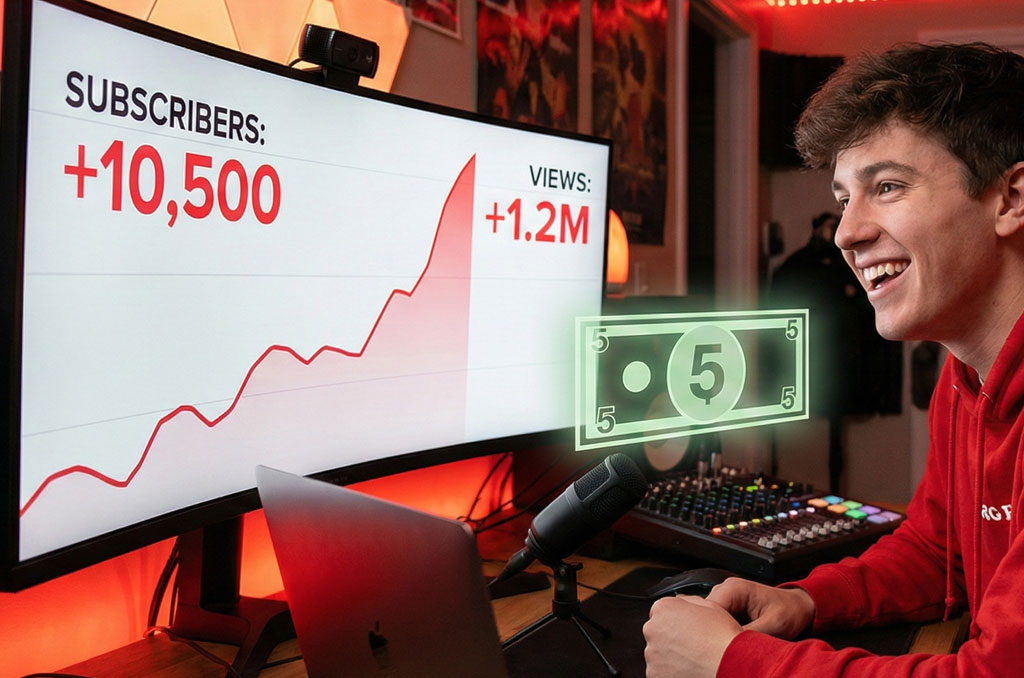
The Beginner’s Guide to YouTube Ads: How Small YouTubers Can Start With $5
If you’re a Small YouTuber, you know the struggle: you pour hours into creating an awesome video, but when you hit publish, it feels like dropping a tiny pebble into a huge ocean. Your video just disappears among millions of others. How are new viewers supposed to find your amazing content?
For years, people thought advertising was only for big companies with massive budgets. But here’s the exciting news: the landscape has changed. You don’t need thousands of dollars to get noticed. You can actually start running powerful, targeted YouTube Ads for as little as $5. Yes, you read that right—the cost of a fancy cup of coffee can kickstart your channel’s growth. This guide is your friendly, non-technical roadmap to launching your very first, budget-friendly campaign and finally getting the eyeballs your videos deserve.
Why YouTube Ads Are Your Secret Weapon as a Small YouTuber
 As a Small YouTuber, your biggest challenge isn’t creating content; it’s distribution. You need a way to bypass the slow, grinding pace of the YouTube algorithm when you’re just starting out. Think of the algorithm as a club bouncer who only lets in the popular kids. YouTube Ads is like a special VIP pass that lets you skip the line and get your content right in front of people who are already interested in what you make. This method is fast, controllable, and surprisingly cheap if you know how to use it right.
YouTube Ads Level the Playing Field (Reach)
When you upload a video, YouTube tries to figure out who might like it and shows it to a tiny handful of people. If those initial viewers don’t watch for long, YouTube stops promoting it. This makes it incredibly hard to gain momentum. Using YouTube Ads changes this equation completely because you are now paying YouTube to show your video to a much larger group of people.
Imagine your channel is a small lemonade stand on a quiet back street. The only customers you get are the few people who happen to walk by. When you use ads, you’re essentially setting up a billboard on the busiest highway in town, guaranteeing that thousands of potential customers see your sign. You’re no longer waiting for the algorithm to maybe notice you; you are paying to make sure people see your work, making the barrier to entry much lower for independent creators.
The sheer volume of videos uploaded daily means that relying solely on organic discovery (people finding you without ads) is like waiting for a lottery win. Investing a small amount in advertising allows you to inject momentum into a promising video. This initial burst of views and watch time can then signal to the YouTube algorithm that your content is actually good, prompting it to start showing your video organically, long after your ad campaign has ended. It’s like giving your video a powerful jump-start.
Finding Your Perfect Audience (Targeting)
 One of the most valuable aspects of using YouTube Ads is the ability to target very specific groups of people. This is how you make your $5 work like $50. You don’t just want any views; you want views from people who are most likely to become dedicated subscribers. YouTube allows you to show your ad only to people who have recently watched videos similar to yours or who follow channels in your niche.
Think of it this way: if you run a channel about collecting rare Pokémon cards, you don’t want to spend money showing your ad to people who only watch cooking videos. Instead, you can tell YouTube, “I only want to show my ad to people who watched a video about ‘Top 10 Rare Pokémon’ in the last 7 days.” This level of precision is what sets platform advertising apart. If your channel teaches homeowners about house maintenance or remodeling, you can target viewers already searching for topics like bathroom renovations or concrete repairs. For example, if you make videos on home improvement, you can link to helpful resources like Understanding Cracks in Concrete
You are laser-focusing your small budget on the most receptive viewers.
This process is called “audience segmentation,” but for us, it’s just smart shopping. By carefully choosing your target audience—their interests, the types of videos they watch, or even their age—you ensure that every cent of your $5 daily budget is spent on a highly qualified potential subscriber. This focus minimizes wasted spend and maximizes the chances of getting real engagement and channel growth, which is exactly what a Small YouTuber needs.
The Power of the $5 Starting Budget
Many people assume advertising costs are fixed and prohibitively high. In reality, you set the rules. When we talk about a $5 budget, we are talking about a Daily Budget. You are telling the system, “Do not spend more than $5 on this advertisement today.” This cap means your risk is incredibly low.
Imagine you are ordering a pizza, but you set a $5 limit on the delivery driver’s spending. Once the driver hits $5 on gasoline, they stop delivering for the day—that’s it! You have complete control. For YouTube Ads, that $5 might translate into hundreds of impressions (the number of times people see your ad) or dozens of actual views, depending on how competitive your niche is. It is a fantastic, low-stakes way to simply learn how the system works.
The goal of your first $5 campaign is not to get rich or become famous overnight; it’s to gather data. You want to see which audiences responded best to your video. Did people interested in “gaming tips” click more than people interested in “tech reviews”? This small investment is essentially paying for a crucial lesson about your audience that would take months of guessing to figure out organically. After a few days, you can analyze this data and then, if you feel confident, maybe increase the daily budget to $10.
Preparing Your Channel and Content for YouTube Ads Success
 Before you dive into the Google Ads dashboard and start spending money, you need to make sure your content is ready to shine. Throwing money at a video that isn’t optimized is like putting premium gas in a car with a flat tire—it won’t go anywhere. Preparation is the key to ensuring your $5 investment pays off.
Choosing the Right Video (Your “Ad” Content)
The video you choose to promote should not be a random vlog or a simple introduction. It needs to be your absolute best work, acting as a strong sample of what your channel offers. Your promoted video is, in effect, a commercial for your entire channel. It should have high production quality (for your budget level), solve a specific problem, or be intensely entertaining right from the very first second. If you’re not yet sure what type of videos perform well for beginners, check out our guide on Content Ideas That Work for Small YouTubers.
Think about a movie trailer. It doesn’t show you the entire movie, but it highlights all the best moments, setting the tone and style. Your ad video should be concise, ideally under 10 minutes, and have a clear call to action at the end. Make sure the video tells the viewer exactly what to do next: “If you liked this, hit the subscribe button!” Don’t make them guess what your channel is all about.
The best videos to promote are often “evergreen” content—videos that remain relevant for months or even years, such as tutorials, reviews of timeless products, or educational content. For example, if you create DIY or construction tutorials, videos that solve long-term homeowner problems work best — like those explained in guides such as 7 Common Bathroom Remodel Mistakes. Promoting a video about something that happened today might get views immediately, but once the news cycle moves on, the views stop. Evergreen content continues to pay dividends long after you stop running the ad, maximizing the return on your initial $5 investment.
The Importance of Your Thumbnail and Title (The Click)
 In the world of YouTube Ads, your thumbnail and title are more important than your video quality. Why? Because they are the only two things a potential viewer sees before they decide to click. If your thumbnail looks messy or your title is confusing, your ad will fail, regardless of how great the video is. This is the “first impression” that determines if your ad money is spent wisely.
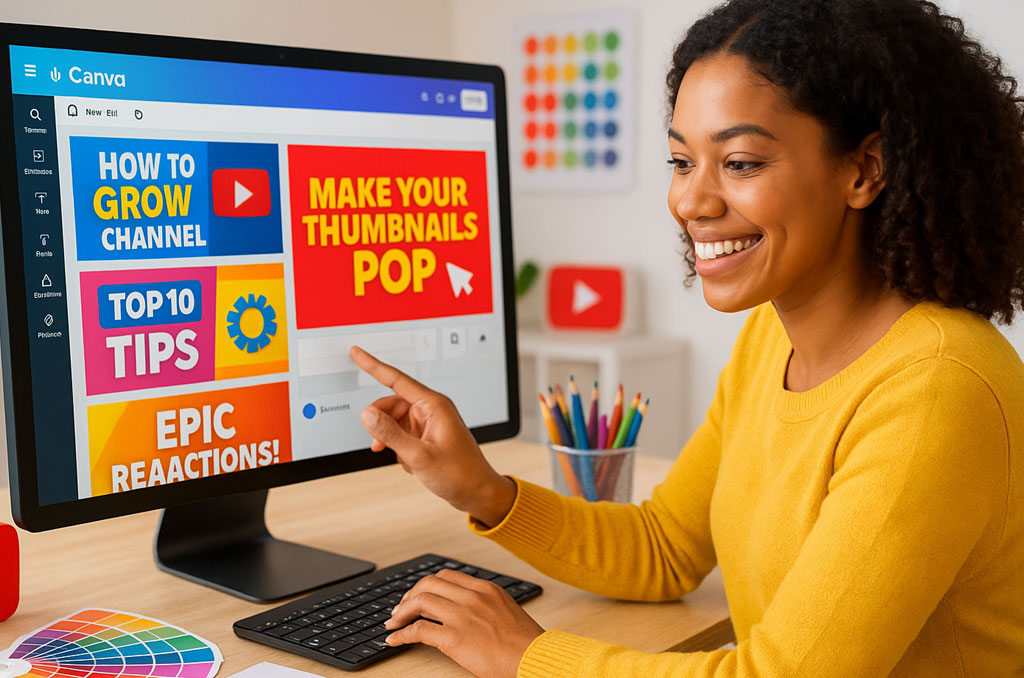
A great thumbnail should be high-resolution, easy to read on a small phone screen, and visually intriguing. To make this even easier, you can use the free tools listed in our post Best Free Tools for YouTube Creators Under 1K Subscribers to design thumbnails, edit videos, and improve your overall content quality. Use bold colors, clear, large text, and a compelling image of your face reacting to the topic. The title should use strong power words (e.g., “Ultimate,” “Secret,” “Easy Fix”) and clearly communicate the value the viewer will receive. If your video is about fixing a common computer problem, the title should promise a solution, not just describe the problem.
Focus on creating curiosity and managing expectations. The viewer should know exactly what they are clicking into, and the thumbnail/title should make them want to know more. Before launching your $5 campaign, consider asking friends or posting a poll on social media to see which thumbnail/title combination they would be most likely to click. This small step can dramatically improve the success of your entire campaign.
Setting Up the Campaign Goal (Views vs. Subscribers)
When you set up an ad campaign, you have to choose what you want to achieve. For a Small YouTuber using a small budget, the primary goal is typically Exposure and Channel Growth. You need to decide if you want to aim for maximum views (reach) or maximum conversions (subscribers).
For your first $5 experiment, aim for Views and Engagement. You want to figure out which audience responds best. For example, if your content is in the home-building or architectural niche, your viewers may respond better if your content solves practical construction issues. You can even recommend resources like How to Choose the Right General Contractor for viewers wanting deeper insights. This usually means choosing the “Product and Brand Consideration” or “Custom campaign” option within the Google Ads dashboard, which gives you control over cost per view (CPV). The lower your target CPV, the more views you’ll get for your $5.
While getting subscribers is the ultimate goal, it is a secondary action. You can’t get a subscriber unless you first get a view. By optimizing your first ad campaign for low-cost, high-quality views, you are filling the top of your funnel. The video itself—your compelling content and call to action—is what converts those viewers into subscribers, meaning you are letting the video do the heavy lifting, not the ad system.
Step-by-Step: Launching Your First $5 YouTube Ads Campaign
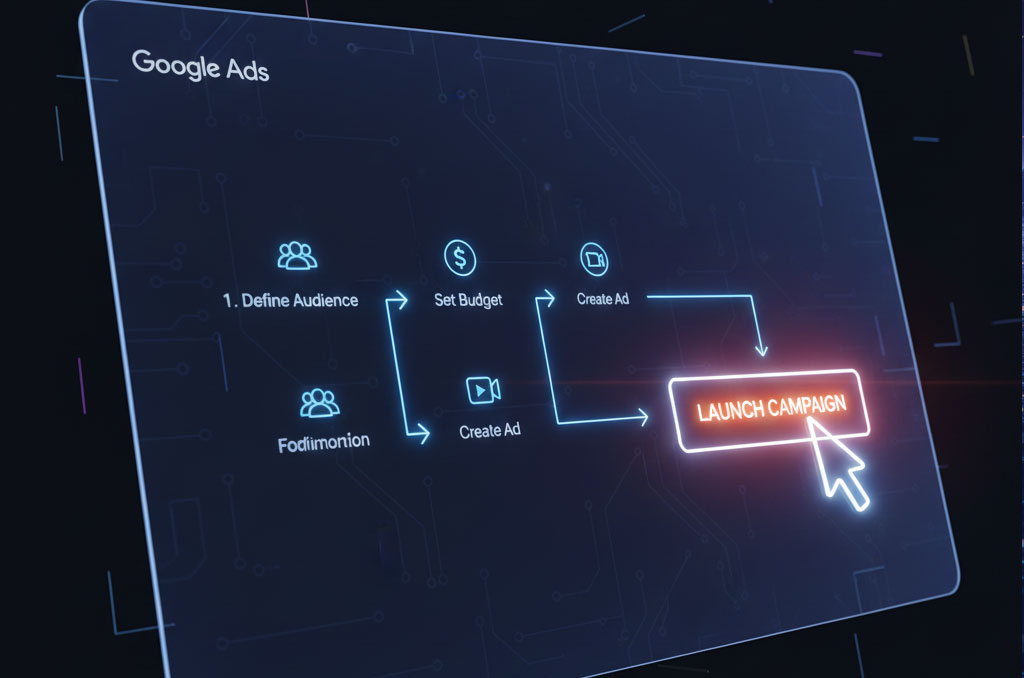 Now that your video is ready, let’s walk through how to navigate the system and set up your ad. The process happens inside the Google Ads platform, which can look intimidating, but we’ll focus only on the essential steps for your small budget.
Setting the Daily Budget (The $5 Strategy)
When creating your campaign, you’ll be asked to set a budget. This is where you implement the $5 strategy. You need to select the Daily Budget option and set the number to $5. This locks your spending, ensuring you cannot accidentally overspend. Always double-check this setting before you launch the campaign.
You will also be asked to set a bidding strategy. For beginners using a $5 budget, the best approach is to choose “Maximum CPV” (Cost Per View) bidding. A good starting bid for a non-competitive niche (like specific history facts or niche DIY projects) might be around $0.05 to $0.10. This means you are telling YouTube, “I am willing to pay up to 10 cents every time someone watches my ad for 30 seconds or clicks it.”
Since the average cost per view is often lower, you might end up paying much less than your maximum bid, allowing your $5 to go further. If your ad isn’t getting any impressions after 24 hours, you may need to increase your max CPV bid slightly. This continuous testing is how you learn the best price for your niche, which is the whole point of this small, introductory experiment.
Picking the Right Ad Format (In-Feed Video Ads)
 YouTube offers several ad types, and for a small budget, the choice is crucial. You want to focus on the format that guarantees the viewer is actively choosing to watch your content, rather than forcing them to watch a Skip-able ad. The best choice for Small YouTubers is the In-Feed Video Ad (previously called Discovery Ads).
In-Feed Video Ads appear on the YouTube homepage, in search results, and next to other related videos. They look like regular video thumbnails but are labeled as “Ad.” The user must click on your ad to watch the video. This is important because you are only charged when someone clicks, meaning the people watching your video wanted to watch it.
Avoid the “Skippable In-Stream Ads” (the ones that play before or during a video). While they offer wide reach, they are often clicked away quickly, leading to low-quality views and wasted spend for a small channel. By sticking to the In-Feed format, you ensure that the views you get are from viewers who are genuinely interested, making them much more likely to subscribe to your channel.
Geographic Targeting and Scheduling
The final, essential step is narrowing down where and when your ad is shown. Do not set your ad to run in every country worldwide. If your video is in English, you should only target English-speaking countries (like the US, Canada, UK, Australia) where your audience is most likely to be. If your content is hyper-local (e.g., vlogging about a specific city), you should target that city only.
This practice, known as geographic targeting, prevents your $5 from being diluted across an audience that won’t understand your language or relate to your content. For example, if you make videos about the NBA, targeting basketball fans in the US makes more sense than targeting a country where a different sport is dominant. It’s all about focusing the power of your small budget.
 Finally, think about scheduling. If your audience is mostly in North America, you may want to set your ad to run during peak viewing hours there (evenings and weekends). This is optional, but it ensures your ad is seen when people are actually sitting down to watch YouTube, not when they are asleep or at school. Setting up your geographic and scheduling parameters correctly ensures your precious $5 is spent strategically, transforming potential views into real channel growth.
This is your moment to stop waiting and start acting! Running your first YouTube Ads campaign, even with a tiny $5 daily budget, will change how you think about growing your channel. It moves you from passively hoping for views to actively generating them. You’ll gain valuable, real-world data about what works and who your audience is. Start small, be smart about your targeting, and watch how this simple strategy helps you, a Small YouTuber, finally break through the noise. Let the learning begin. And if you also want to grow a website or blog alongside your YouTube channel, our SEO Training Basic Guides will help you build long-term organic traffic.