Beginner YouTube SEO: How to Rank Your Videos in 2025
Imagine spending days scripting, filming, and editing a video. You pour your heart into it, hit “upload,” and wait for the views to roll in. But days go by, and the view count is stuck in the single digits. It is frustrating, right? You are not alone. This happens to thousands of creators every day, not because their content is bad, but because nobody can find it. This is where YouTube SEO 2025 comes into play. It is the map that leads viewers straight to your content treasure.
YouTube is basically a giant, chaotic library. Every minute, 500 hours of video are uploaded. Without a proper system, your video is just a needle in a massive digital haystack. YouTube SEO for beginners is simply the process of labeling your needle so the magnet (the YouTube algorithm) can find it instantly. It is not about tricking the system or using magic cheats; it is about helping YouTube understand who your video is for so they can show it to the right people. If you’re still figuring out what type of videos to create, check out Content Ideas for Small YouTubers — it gives you simple video ideas that are easier to rank.
In this YouTube ranking guide, we are going to strip away the complex tech jargon. We will look at simple, actionable steps you can take right now. Whether you are a vlogger, a gamer, or a teacher, these principles are universal. By the end of this post, you will have a clear roadmap on how to rank YouTube videos and turn your channel from a ghost town into a thriving community.
What is YouTube SEO and Why Does It Matter?
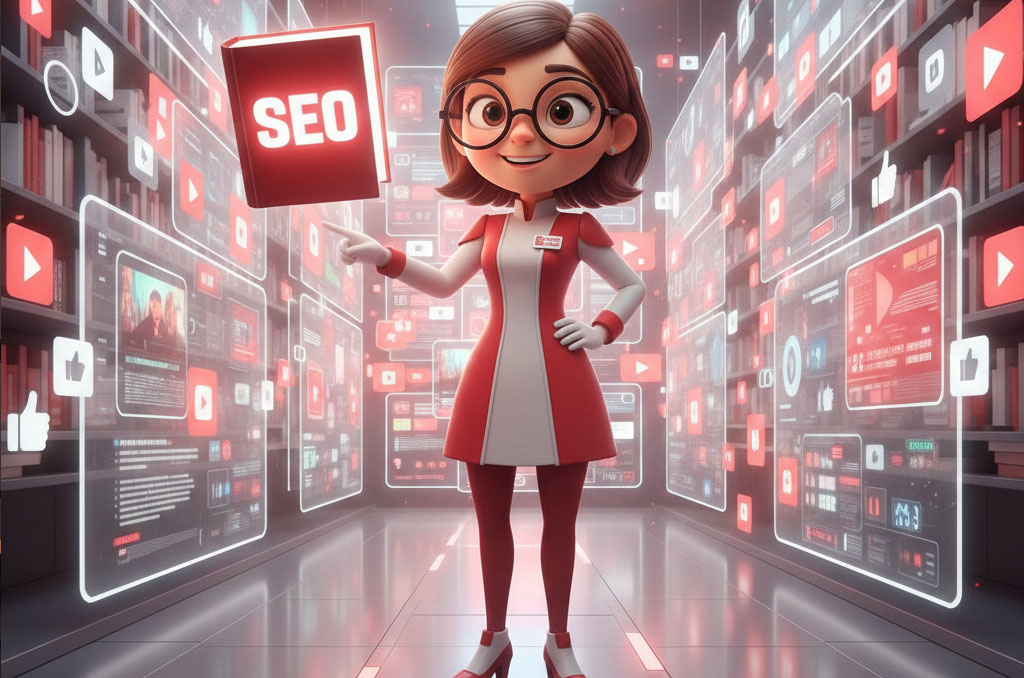 To understand YouTube SEO for beginners, think of YouTube as a very helpful, but slightly overwhelmed, librarian. When a user walks in and asks for a book on “how to bake a cake,” the librarian looks at the titles, the summaries on the back, and the chapters to decide which book to hand over. If your book (video) has a blank cover and no summary, the librarian ignores it. SEO stands for Search Engine Optimization, which is just a fancy way of saying “dressing your video up so the librarian notices it.”
In 2025, the YouTube algorithm has gotten smarter. It doesn’t just look for matching words; it tries to understand intent. It wants to know if your video actually answers the viewer’s question or entertains them. If you want to rank YouTube videos in 2025, you have to prove to YouTube that your content is valuable. When you do this correctly, your video appears in search results, on the homepage, and in the “suggested videos” sidebar. This is “free” traffic that comes to you while you sleep.
Ignoring SEO is like opening a pizza shop in a dark alley with no sign. You might have the best pepperoni slice in town, but if no one knows you exist, you go out of business. By applying the strategies in this post, you are effectively putting up a giant, neon sign on Main Street. You are removing the barriers between you and your potential audience, making it easy for them to click, watch, and subscribe.
The Foundation: Keyword Research to Help Rank YouTube Videos in 2025
Everything starts with a keyword. A keyword is simply the word or phrase a user types into the search bar. If you want to learn how to rank YouTube videos, you must stop guessing what people want and start knowing. Imagine you are making a cooking video. If you title it “My Grandma’s Secret Recipe,” nobody will find it because nobody searches for that. But if you title it “How to Make Fluffy Pancakes,” you are tapping into a phrase people actually use.
The best tool for finding these keywords is free: it is the YouTube search bar itself. You can also speed up your workflow with helpful apps — here’s a full list of Best Free Tools for YouTube Creators you can use for keywords, editing, and thumbnails. Go ahead and type “how to bake” into the search bar, but don’t hit enter yet. Look at the dropdown menu of suggestions. You might see “how to bake a cake,” “how to bake bread,” or “how to bake salmon.” These aren’t random guesses; these are actual searches real people are making right now. This is a goldmine for YouTube SEO 2025.
Once you have your main topic, you need to find specific angles. This is called finding “long-tail keywords.” Instead of just targeting “fitness,” which is too broad and competitive, you might target “10-minute home workout for beginners.” The competition is lower, and the audience is very specific. By building your video around these specific phrases, you give yourself a fighting chance to be seen. You aren’t trying to beat the biggest channels in the world; you are trying to be the best answer for a specific question.
Click-Through Rate: The Art of Getting the First Click
 You can have the best SEO in the world, but if nobody clicks on your video, YouTube will stop showing it. This metric is called “Click-Through Rate” (CTR). Think of your video like a store in a mall. Your title and thumbnail are the store window. If the window display is boring, dark, or confusing, people will keep walking to the next store. To rank YouTube videos in 2025, your “store window” needs to be irresistible.
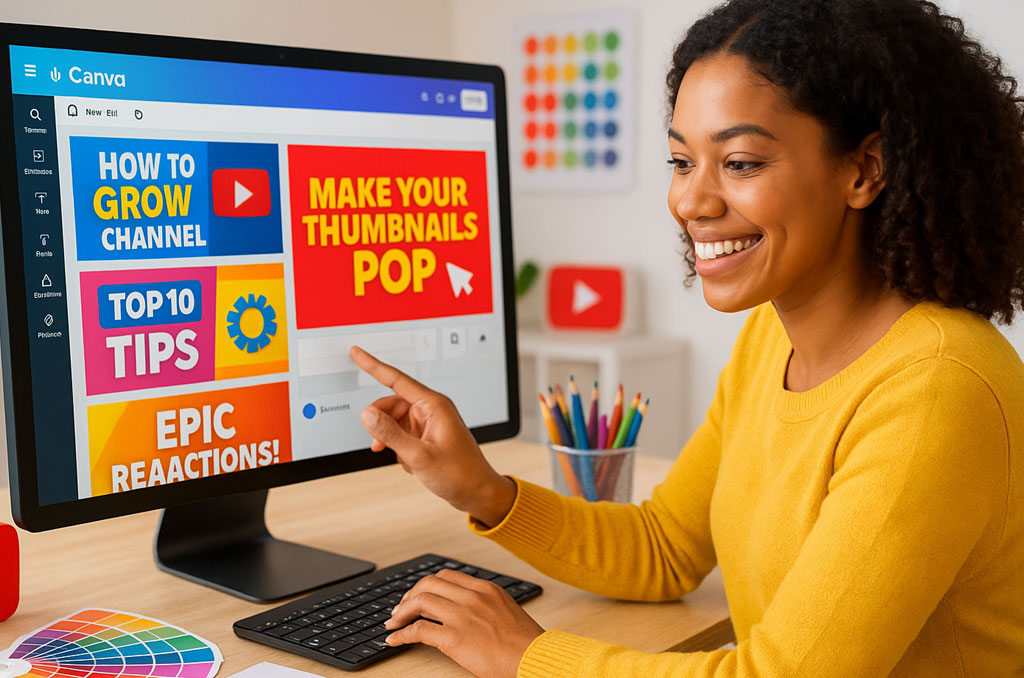
Let’s talk about thumbnails first. Visuals process faster in the human brain than text. A good thumbnail should be bright, high-contrast, and easy to read on a small phone screen. Use facial expressions that match the emotion of the video—excitement, shock, or focus. Avoid clutter. If you put too much text or too many images in the thumbnail, it looks messy. A simple rule of thumb: if you can’t understand the thumbnail in one second, it is too complicated.
Your title works hand-in-hand with the thumbnail. It shouldn’t just repeat what the thumbnail says; it should add to it. If your thumbnail shows a burnt cake, your title shouldn’t just be “I Burnt A Cake.” It should be something compelling like, “I Tried Following a Professional Baker’s Recipe (Disaster).” This creates a “story gap”—a curiosity that the viewer needs to satisfy by clicking. High CTR tells YouTube, “Hey, people really want to see this!” which is a huge factor in our YouTube ranking guide.
Watch Time and Retention: The Secret Sauce of the Ranking Guide
Getting the click is only half the battle. Once they are inside your “store,” you need to keep them there. This is where Watch Time and Audience Retention come in. Watch Time is the total amount of time people have spent watching your video. YouTube loves videos that keep people on the platform longer. If you want to master YouTube SEO for beginners, you need to understand that a 10-minute video that people watch until the end is worth more than a 20-minute video that people turn off after 30 seconds.
Audience retention is the percentage of your video that the average viewer watches. Imagine your video is a bucket of water. If the bucket has holes (boring parts, bad audio, long intros), the water (viewers) leaks out. If the bucket is empty by the halfway mark, YouTube assumes the video isn’t very good. To fix this, you need to cut out the fluff. In 2025, attention spans are shorter than ever. Don’t spend two minutes introducing yourself. Start the video by delivering on the promise in your title immediately.
To improve retention, use “pattern interrupts.” This is a fancy term for changing what is on the screen. If you just sit and talk at the camera for 10 minutes, people get bored. If you want a faster way to grow your channel while improving retention, learn how to make highly engaging short videos here: How to Create Viral Shorts as a Small YouTuber Change the camera angle, pop up some text, show an image, or use a sound effect every 30 to 60 seconds. These little changes reset the viewer’s attention. High retention is the strongest signal you can send to YouTube. It proves your content is engaging, and that is the key to rank YouTube videos in 2025.
Optimization Tactics: Descriptions, Tags, and Chapters
Now let’s get into the nitty-gritty of the upload process. The video description is often overlooked, but it is valuable real estate. Don’t just leave it blank or write “Hope you enjoy.” The first two lines of your description appear in search results, so they should include your main keywords naturally. Write a brief summary of what the video is about, almost like a mini-blog post. This gives the algorithm more context to understand your content.
Tags are less important than they used to be, but they still help, especially for common misspellings. If your channel name is “Jon’s Tech,” you might add tags like “Johns Tech” or “John’s Tek” just in case. However, don’t waste hours stressing over tags. Focus more on “Video Chapters” (timestamps). By listing out the sections of your video in the description (e.g., 0:00 Intro, 2:30 The Secret Tip), you make the video user-friendly. Plus, Google Search often displays these chapters directly in search results, giving you a massive advantage in this YouTube ranking guide.
Another often missed optimization is speaking your keywords. YouTube has technology that automatically transcribes what you say in the video to generate captions. If your video is about “Budget Gardening,” actually say the phrase “Budget Gardening” in your intro. This confirms to the algorithm that the video content matches the title and thumbnail. It is a small detail, but when you are learning how to rank YouTube videos, every little bit counts.
Engagement: Turning Viewers into a Community
 The final piece of the puzzle is engagement. YouTube looks at likes, comments, and shares as votes of confidence. If people are interacting with your video, it must be triggering an emotion or providing value. To boost this, you need to ask for it—but be smart about it. Don’t just robotically say “Like and Subscribe” at the very beginning. Viewers haven’t seen any value yet! Wait until you drop a really good tip or a funny moment, then ask them to like the video.
Comments are particularly powerful for YouTube SEO 2025. A comment section that is alive with discussion signals that the video is relevant. Encourage this by asking a specific question of the day. Instead of “Leave a comment,” ask “What is your favorite pizza topping? Let me know below!” Specific questions get more answers. When people comment, make sure you reply, especially in the first 24 hours. This doubles the comment count and makes your viewers feel appreciated.
Community posts (if you have access to them) are also a great way to keep the momentum going between uploads. Polls, behind-the-scenes photos, or simple text updates keep your audience engaged with your brand. The more they interact with your channel, the more likely YouTube is to recommend your future videos to them. It creates a snowball effect that helps you rank YouTube videos in 2025 consistently, not just once.
Conclusion
Mastering YouTube SEO for beginners doesn’t happen overnight, but it is not rocket science either. It is about understanding that there is a human on the other side of the screen and a robot trying to connect you to them. By doing proper keyword research, creating clickable packaging, keeping viewers watching, and optimizing your metadata, you are setting yourself up for success.
Remember, the goal isn’t just to rank YouTube videos in 2025; it is to build an audience that trusts you. To speed up your growth even more, follow this guide on How Small YouTubers Can Get 1,000 Subscribers Fast SEO is just the tool to get your foot in the door. The quality of your content is what invites them to stay. So, take this YouTube ranking guide, apply these steps to your next video, and watch how your channel grows. The algorithm is waiting for you—go give it what it wants! And if you ever want to boost a video with paid promotion, here’s a simple beginner-friendly walkthrough: The Beginner’s Guide to YouTube Ads.